How Meal Planning Reduces Food Waste (and Your Grocery Bill)
Meal planning reduces food waste at the source: when every item in your trolley has a specific dinner attached, nothing gets bought "just in case" — and it's the just-in-case food that ends up rotting at the back of the fridge. Plan the week, shop from the plan, and the bin gets lighter along with the bill.
European households throw away a startling share of the food they buy, and most of it isn't scraped off plates — it's ingredients that were never cooked at all. The wilted bag of spinach, the half-forgotten yoghurt, the vegetables bought with vague good intentions. Food waste is mostly a purchasing problem, which means it's mostly a planning problem.
Waste starts in the supermarket, not the kitchen
Unplanned shopping buys for an imaginary week: the ambitious vegetables, the third condiment, the multipack because it was on offer. Then the real week happens — busy evenings, a takeaway, less cooking than hoped — and the imaginary week's food quietly expires. A plan replaces the imaginary week with a concrete one, so the shopping matches the cooking that will actually occur.
Three planning habits that cut waste fastest
- Shop from a list generated by the plan. If it's not needed by a dinner this week, it doesn't go in the trolley. This one habit does most of the work.
- Make ingredients overlap. When three dinners share a bunch of parsley or a tub of crème fraîche, the whole thing gets used instead of a third of it.
- Check the fridge before you shop. Plan the first dinner or two around what's already open and ageing, then buy only the gap.
The bill drops with the bin
Every wasted ingredient was paid for, so the economics are blunt: a household that stops wasting a modest portion of its shop saves real money every single week — often more than any coupon or offer ever will. Waste reduction isn't a side benefit of meal planning; for many households it's the biggest saving on the table.
The fastest way: Soti on iPhone
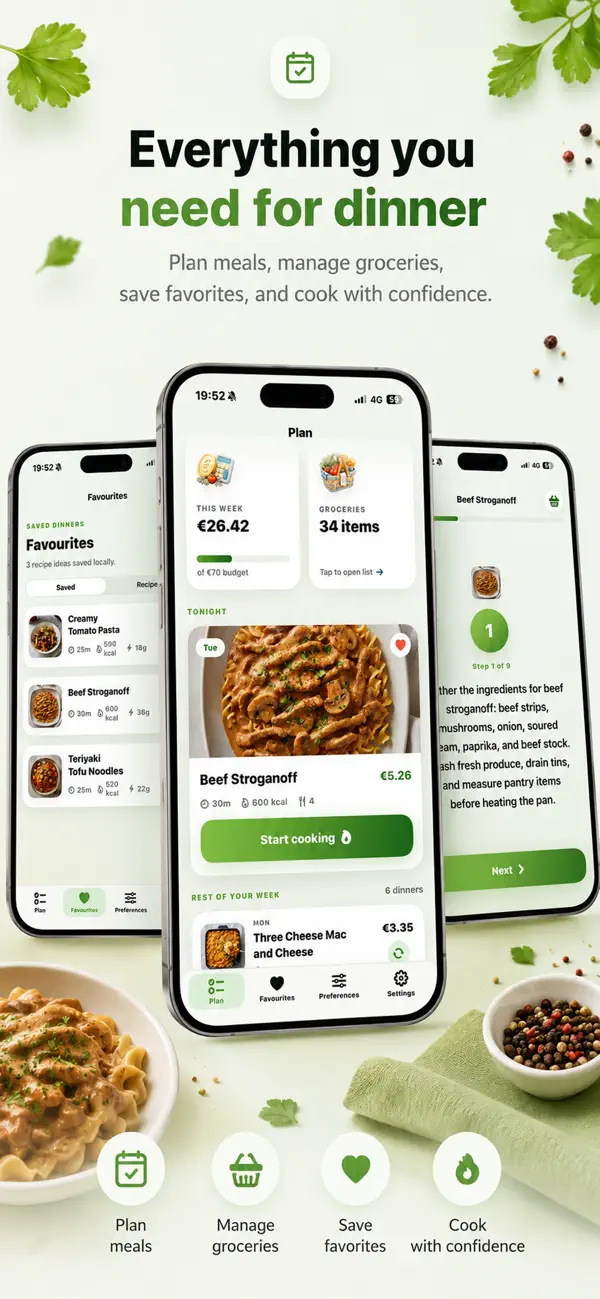
Soti builds the low-waste week automatically: a planned set of dinners, one exact shopping list, and nothing in the trolley without a job to do.
- Tell Soti your supermarket, weekly budget, household size, and dietary needs — once.
- Soti plans seven realistic European dinners, portioned for your household so quantities match what you'll actually cook.
- The shopping list is generated from the plan, consolidated across recipes, and grouped by aisle — every item has a dinner attached.
- Swap any dinner you don't fancy before you shop, so you never buy for a meal you won't make.
- A gentle weekly reminder gets the plan ready before the shop, keeping the habit alive week after week.
Tip: keep one "flex night" late in the week with no fixed recipe — its job is to finish whatever the week left behind. A fried rice, frittata, or soup night clears the fridge better than any storage container.
